
Artificial Intelligence (AI) is a hot topic in many fields for applications and science. Since OpenAI announced its original ChatGPT app in November 2022, the AI industry has grown leaps and bounds! ChatGpt surpassed one million users within one week of its announcement. In August 2025 with its fifth version, it has surpassed 700 million users! Now OpenAI, Oracle, Microsoft, Google, Meta, and many other industries all use AI in their browsers or apps. What does it take to make AI possible? The quick answer is AI data centers, which are also growing at a fast rate!
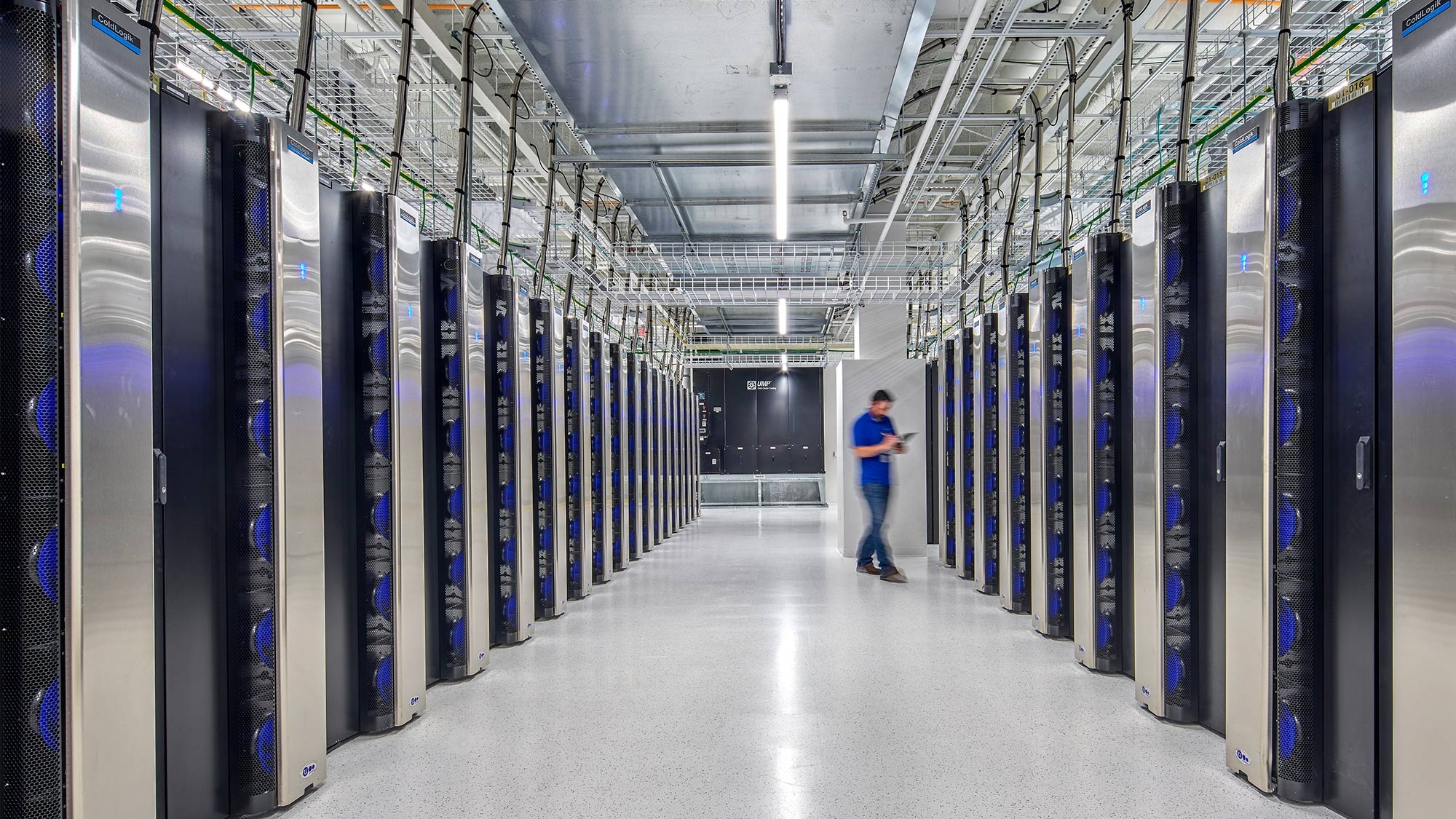
Data Center Computers
The major AI data centers built and operated by OpenAI, Amazon (AWS), Meta, and Google are now campus‑scale projects that each span hundreds to thousands of acres in different states, draw power at rates measured in hundreds of megawatts to multiple gigawatts, and acres of water, thus together are driving a rapid increase in electricity and water demand for AI workloads. AI training and inference workloads are concentrated, power‑dense and grow energy needs far faster than traditional cloud workloads.
OpenAI and Oracle recently announced its new massive Stargate data center in Abilene, Texas. The facility will require 1,100 acres, approximately 900 megawatts of electricity, and acres of water on a scale comparable to a mid-sized city-and is supported by both local grid sources and a new on-site gas-fired power plant.
New Amazon Web Services (AWS) campus announcements include projects on the order of several hundreds of acres for large hyperscale data centers (example: an 800‑acre AWS campus announced in North Carolina and a larger 1,200-acre campus in Indiana). AWS reports design and efficiency metrics describe their data centers are built to support AI at rack and chip liquid‑cooling density which also requires a large water supply. AWS sites routinely plan for tens to hundreds of megawatts each, and modern hyperscale AI campuses can aggregate to gigawatt‑scale capacity when fully built out.
AWS cites thousands to tens of thousands of customers for specific silicon and instance families (for example, 70,000+ customers have used AWS Graviton instances) and hosts a very large, diverse customer base that uses AWS ML/AI services.
Meta’s recently announced hyperscale AI campus plans include multi‑thousand‑acre footprints for flagship projects including a 2,250-acre data center at a large Richland Parish / Hyperion campus concept and multi‑million‑square‑foot campuses in single sites. Meta disclosed electricity consumption of about 14,975 GWh in 2023 across its operated facilities (which equates to roughly 41 GWh per day of electricity consumption across those facilities, implying continuous site power draw on the order of hundreds to thousands of megawatts for the largest campuses.
Meta’s primary “customers” for its AI compute are internal for powering their Facebook, Instagram, WhatsApp, and ad systems.
Individual Google site proposals in local jurisdictions commonly range from a few hundred up to 467 acres for single hyperscale facility sites; Google is also planning multi‑facility campuses that can cover hundreds of acres in aggregate.
Google’s AI data centers run workloads that in many locations draw tens to hundreds of megawatts; Google has publicly started utility agreements to curtail or shift AI workloads to help grid reliability, and the company acknowledges that training and large ML workloads can require sustained multi‑MW to multi‑hundred‑MW usage during training runs.
Google Cloud serves a large set of enterprise customers using Google’s AI and ML products, but Google does not publish a single definitive public count of customers specifically using AI computing power.
Overall, you can see that AI is very beneficial to these major companies, needing lots of space, power, and water to operate their tremendous data centers, so we can enjoy all the benefits of using their massive Internet services!